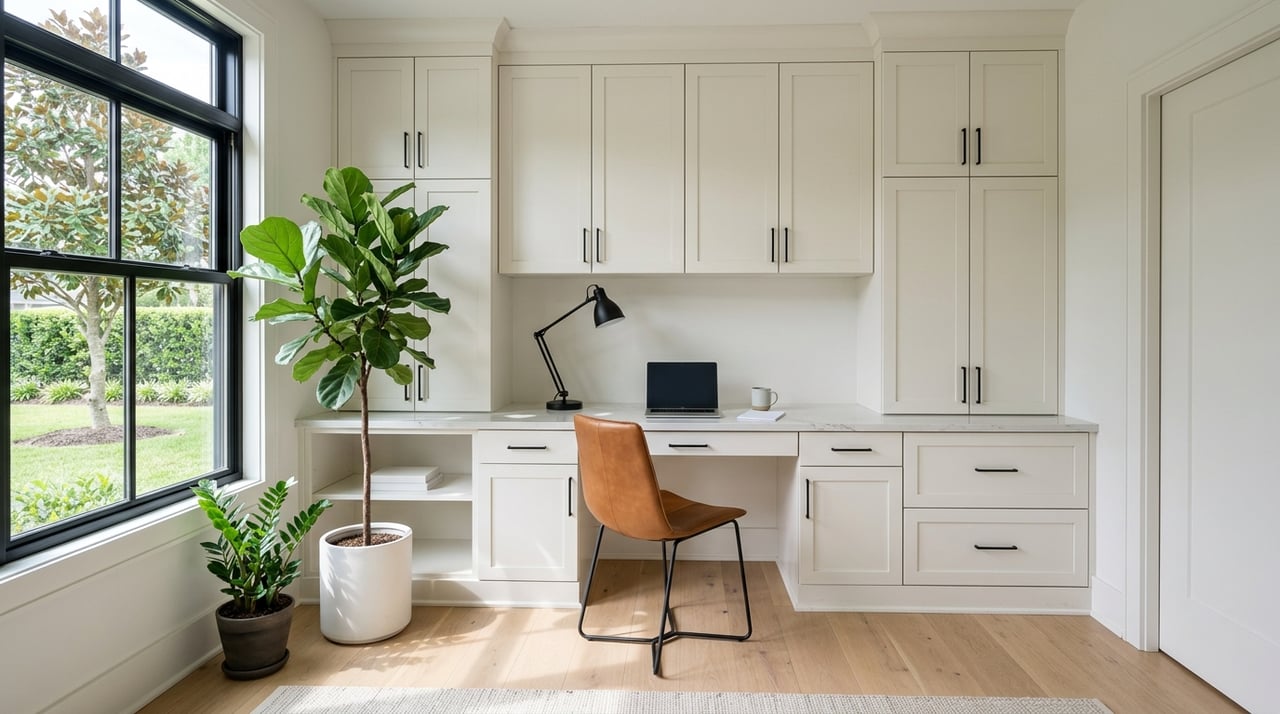
Choosing A Raleigh Neighborhood For Remote Work
May 7, 2026
May 7, 2026
If you work from home, your neighborhood does more than shape your weekends. It affects your calls, your focus, your coffee runs, and how easy it feels to step away from your desk without losing momentum. If you are trying to choose the right part of Raleigh for remote work, the goal is not just finding a nice area. It is finding a daily setup that fits how you actually live and work. Let’s dive in.
Before you compare Raleigh neighborhoods, look closely at the home itself. For remote work, the best floor plan usually gives you a closed office or at least clear separation between work space and living space. That matters if you spend hours on video calls, need quiet during the day, or simply want to leave work behind at the end of it.
Internet is just as important. In Raleigh, fiber availability can vary by address, so it should never be assumed based on the neighborhood alone. The FCC National Broadband Map shows fixed broadband options at the address level, and providers like AT&T and Google Fiber also make it clear that service needs to be verified home by home.
That means two homes on the same street may offer different internet options. If remote work is central to your home search, checking connectivity should be part of your early screening process, not something you save for later.
The best Raleigh neighborhood for remote work depends on your routine. Some buyers want to walk to lunch, coworking, and errands. Others want a quieter home base with easy access to trails and parks.
A simple way to narrow your options is to think about your week, not just your commute. Ask yourself where you will spend most of your time, how often you leave home during the day, and what helps you stay productive.
Downtown Raleigh, Glenwood South, the Warehouse District, and Boylan Heights tend to fit buyers who want convenience close at hand. Raleigh describes downtown as the city’s economic engine, and the coworking options in and around downtown support that pattern.
Raleigh Founded has a downtown location on North Street. WeWork One Glenwood sits between Glenwood South and the Warehouse District. BLDG Co. is in Boylan Heights, and The Assembly is in the Warehouse District.
This part of Raleigh can make a lot of sense if you want quick access to coworking, restaurants, coffee shops, and after-work options. The tradeoff is that these areas are often chosen for energy and convenience, not necessarily for the most tucked-away feel.
Glenwood South, in particular, is known for its active mix of restaurants, nightlife, shops, galleries, and studios. If you like the idea of stepping out for lunch, taking a short walk between meetings, or having a social atmosphere nearby, central Raleigh may feel like a strong fit.
Midtown Raleigh can be a practical middle ground for remote and hybrid workers. The Midtown area includes North Hills, Crabtree Valley, Village District, and Five Points, and Visit Raleigh notes that each of these areas is walkable.
For many buyers, this is where Raleigh starts to balance convenience with a bit more breathing room. North Hills offers more than 130 shops, restaurants, bars, spas, hotels, cinemas, and events. Village District spans six city blocks with more than 100 shops, cafés, restaurants, and services.
Coworking access is also solid here. Spaces has workspaces at North Hills Tower II and Forum I, giving remote workers another option when home is not the ideal setting for every task.
If your week includes errands, lunch meetings, occasional office time, and plenty of work-from-home days, Midtown may offer the easiest blend of flexibility and comfort. It is often a strong choice for buyers who want amenities close by without living in the urban core.
If your ideal remote-work setup is quieter and more residential, north and northwest Raleigh may be worth a closer look. These areas often appeal to buyers who want more separation between home life and busier commercial corridors, while still keeping parks and daily conveniences within reach.
Outdoor access is a major advantage here. Lake Johnson Park offers a paved greenway, natural-surface trails, an indoor facility, shelter rentals, and a swimming pool. Shelley Lake Park includes paved trails and the Sertoma Arts Center, while William B. Umstead State Park sits about 10 miles northwest of downtown and offers extensive hiking and multiuse trails.
That kind of access can make a real difference if your workday goes better with a walk, run, or quick reset outside. For many remote workers, nearby green space is not just a lifestyle perk. It is part of a more sustainable daily routine.
Brier Creek adds another layer of practicality. Brier Creek Commons is an open-air lifestyle center with retail, restaurants, and entertainment, which can make day-to-day errands easier without needing a downtown address.
North Raleigh also includes neighborhood-scale live-work pockets like Lafayette Village. It offers locally owned restaurants, shopping, patio dining, office suites, and recurring events, which may appeal if you want nearby places to meet, work, or take a break close to home.
Raleigh’s zoning map offers a helpful clue when you are comparing neighborhoods. The city says mixed-use districts allow a greater range and concentration of uses and are well suited to commercial centers and corridors.
In practical terms, that helps explain why downtown and Midtown often work well for remote buyers who want a live-work-friendly routine. When services, dining, offices, and everyday errands are clustered together, your day can feel smoother and more flexible.
That does not mean mixed-use areas are automatically the right fit for everyone. It simply means they tend to support a different kind of rhythm than quieter residential pockets near major parks or suburban retail nodes.
Remote work in Raleigh does not have to mean staying home all day. The city maintains a directory of incubators and coworking spaces, including Raleigh Founded, WeWork, Spaces, Industrious, Nest, BLDG Co., The Assembly, Offices.net, and Office Evolution.
That gives you options if your ideal routine changes from day to day. You might work from home most of the week, then use a coworking space for focused projects, meetings, or a change of scenery.
Raleigh also offers strong outdoor-break options. The city has more than 200 parks, and the greenway system connects trails to destinations throughout the city. If a midday walk helps you reset, these features can matter almost as much as square footage.
Dix Park is another standout for buyers looking at central Raleigh. At 308 acres in the heart of the city, it gives nearby neighborhoods access to one of Raleigh’s largest urban parks.
If you are narrowing down Raleigh neighborhoods for remote work, this four-step approach can help keep the search practical.
If you are on video calls all day, prioritize a quiet layout and confirmed internet options. If you split time between home, meetings, and coworking, access to parking, lunch spots, and flexible workspace may matter more.
Think about how often you will leave the house for errands, exercise, lunch, or coworking. Downtown and Glenwood South tend to favor convenience and social energy. Midtown often balances amenities with residential comfort, while north and northwest Raleigh usually lean toward more separation and easier outdoor access.
Use the FCC National Broadband Map to check service at the exact address. Then confirm the same address with the provider, since availability can vary even within the same block.
A neighborhood can look very different at noon than it does on a weekend afternoon. If possible, test the exact block for noise, parking, traffic flow, and the general feel of the workday.
There is no single best Raleigh neighborhood for remote work. The better question is which area supports your routine with the least friction.
If you want walkable convenience and quick access to coworking, downtown and nearby districts may rise to the top. If you want a middle-ground lifestyle with strong amenities, Midtown may check more boxes. If you want a quieter setup with parks and everyday convenience nearby, north and northwest Raleigh may feel more natural.
The key is to evaluate the house and the neighborhood together. When the floor plan, internet, and surrounding amenities all line up with your work style, your next home can support both productivity and quality of life.
If you are planning a move in Raleigh and want help weighing neighborhoods, home features, and day-to-day fit, Van Starling II can help you narrow the options with local insight and a practical, hands-on approach.
Stay up to date on the latest real estate trends.
If you're looking to sell your home or relocate to or from the Triangle area, reach out to Van via call, text, or message, and he will guide you toward achieving your goals.